Abstract:The death of Shinzo Abe, namesake of Japan’s “Abenomics” policy, makes any immediate challenge to his legacy highly unlikely but could eventually allow Prime Minister Fumio Kishida to phase out Abe’s government spending and monetary stimulus.
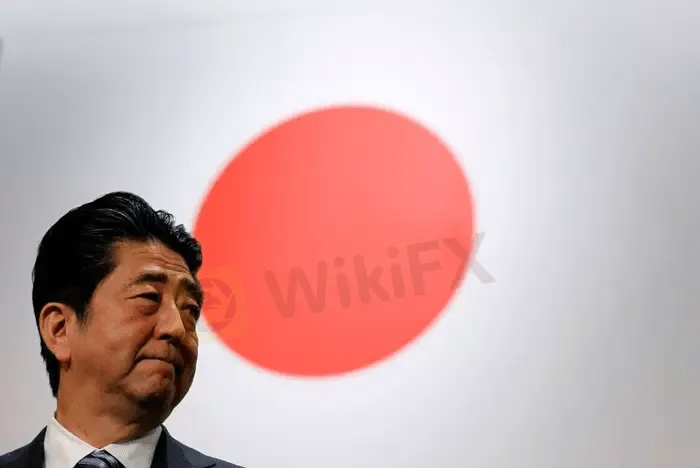
In a rare act of political violence that shocked the nation, Japan‘s longest-serving prime minister was gunned down on Friday while campaigning for Sunday’s parliamentary election, where his partys coalition expanded their upper house majority.
Kishida is unlikely to do anything immediately that could antagonize lawmakers loyal to Abe, who led the biggest faction in Kishidas Liberal Democratic Party (LDP) after stepping down as premier in 2020, analysts say.
But ultimately his absence and the LDP‘s victory in Sunday’s election, helped by an Abe sympathy vote, could give Kishida political capital to change policy course.
Kishida‘s LDP-led conservative coalition was set to increase its majority in the upper house in the election two days after Abe’s assassination.
People close to Kishida have said the premier and his aides want to move toward normalising fiscal and monetary policies and gradually whittle down the Abenomics experiment launched nearly a decade ago.
“There likely wont be a quick reversal of Abenomics, or an exit from ultra-loose monetary policy,” said Koya Miyamae, senior economist at SMBC Nikko Securities.
“In the long run, however, the Bank of Japan must consider some form of tweak to its monetary policy given problems such as the weak yen,” he said. “That will mean former or incumbent BOJ executives will remain strong candidates as next central bank governor.”
Kishida, who belongs to a smaller LDP faction, remained under pressure from Abe and his supporters to maintain massive stimulus and choose a reflationist dove as the next Bank of Japan governor in April.
Abes absence could change the balance of power within the party, diminishing the influence of advocates of big government spending and ultra-loose central bank policies.
“Abe led a group of reflationist-minded ruling party lawmakers favouring big spending, so his absence will have a huge impact on the partys power balance,” said Daiju Aoki, chief Japan economist at UBS Sumi Trust Wealth Management.
Power balance shift
Backed by huge public support for his campaign to pull Japan out of chronic deflation, Abe deployed in 2013 his “three arrows” – aggressive monetary easing, flexible fiscal spending and a long-term growth strategy.
The BOJ‘s massive stimulus, driven by Governor Haruhiko Kuroda, helped reverse a relentless yen rise that hurt Japan’s exporters, boost stock prices and improve business sentiment. Economists, however, criticized a lack of a credible growth strategy and reforms to help the economy shift sustainably into higher gear.
So far, Kishida has stuck with Abenomics, deploying big spending packages to cushion the economic blow from the COVID-19 pandemic and recently to soften the impact of soaring energy and raw material costs.
He has also endorsed the BOJs ultra-low interest rate policy, even as other central banks raises rates, sending the yen to two-decade lows.
“When we look at Japan‘s gross domestic product, corporate profits and job conditions, it’s clear Abenomics has produced great results. Whats important now is to generate wage growth,” Kishida told a television programme on Sunday.
Eventually, Kishida may seek to dial back some of the radical monetary experiment put in place by Kuroda, which has strained financial institutions profits and crippled pricing in the bond market.
Kishida‘s administration was forced to water down Japan’s budget-balancing commitment after fierce pushback from Abe and his allies. Abe‘s death could pave the way for Kishida to focus more on efforts to rein in Japan’s government debt burden, the biggest in the industrial world.
“Abe was a flag-bearer of those who support fiscal expansion. Those people lost their driving force,” said Mikitaka Masuyama, professor at the National Graduate Institute for Policy Studies. “I would not say Kishidas position within the party is rock solid, but he is now more likely than before to have better control over the party.”
While the BOJ is unlikely to reverse ultra-loose monetary policy anytime soon, the fading influence of pro-growth lawmakers could also affect Kishidas choice of BOJ governor.
The prime minister has the final say in who will succeed Kuroda, handpicked by Abe to deploy a monetary bazooka to eradicate deflation, when his second five-year term ends.
Masayoshi Amamiya and Hiroshi Nakaso, career central bankers, are considered among strong candidates, with Amamiya seen as taking a more dovish stance than Nakaso – who had cautioned about the drawbacks of prolonged monetary easing.
“Abe was said to have favoured a reflationist-minded person head the BOJ. The change in the ruling partys power balance could affect the choice of BOJ governor,” said Aoki of UBS Sumi.