

Global Broker Regulation Inquiry App
About WikiFX
English
简体中文
繁體中文
English
Pусский
日本語
ภาษาไทย
Tiếng Việt
Bahasa Indonesia
Español
हिन्दी
Filippiiniläinen
Français
Deutsch
Português
Türkçe
한국어
العربية
اردو


Diverging U.S.-Iran Narratives Leave Hormuz Reopening in Limbo


Abstract:[Chart 1: U.S. and Iran Illustration]The United States and Iran continue to present sharply conflicting accounts of the current state of diplomatic engagement, leaving the outlook for reopening the St
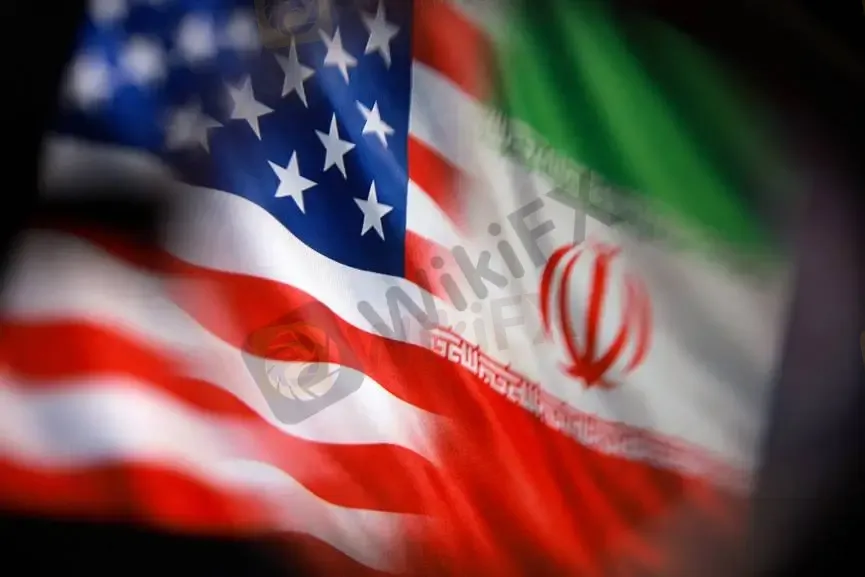
[Chart 1: U.S. and Iran Illustration]
The United States and Iran continue to present sharply conflicting accounts of the current state of diplomatic engagement, leaving the outlook for reopening the Strait of Hormuz highly uncertain. On August 9, U.S. President Donald Trump stated that Washington is handling the Iran issue "quietly." However, Iranian Foreign Minister Abbas Araghchi categorically denied the existence of any direct negotiations, saying, "There are currently no negotiations between Iran and the United States," and emphasizing that any communication is taking place only through intermediaries. Neither side has formally acknowledged a collapse in diplomacy, yet neither has been able to claim that meaningful progress is being made.
The Strait of Hormuz carries roughly 20% of global oil and natural gas shipments. Since the outbreak of the U.S.-Israel military campaign against Iran on February 28, the strategic waterway has remained largely closed, fueling significant volatility in energy markets. Brent crude settled above $83 per barrel last week as investors continued to price in the possibility of diplomatic progress.
Trump described the current engagement as "half negotiations," adding, "We're simply watching what happens with Iran. They're dealing with severe inflation and running out of money." He argued that the U.S. maritime blockade has intensified Iran's economic challenges and likened the situation to "a game of chess," suggesting that the crisis would eventually be resolved. His remarks also indicated a preference for increasing economic pressure rather than launching another large-scale military campaign.
Iran, meanwhile, reiterated that negotiations cannot resume unless the United States first ceases actions that violate previous understandings and takes corrective measures. Ali Akbar Zolghadr, Secretary of Iran's Supreme National Security Council, outlined six conditions for reopening the Strait of Hormuz: permanent guarantees against threats toward Iran, an end to all military aggression, the lifting of the maritime blockade and withdrawal of foreign military forces, compensation for war-related damages, the removal of all sanctions, and the unconditional release of Iran's frozen assets. These demands are widely viewed as setting an exceptionally high bar for any future agreement.
Separately, negotiations between Iran and Oman on establishing new shipping lanes through the Strait of Hormuz are reportedly "progressing well" and have entered their final stage. Under the proposed framework, inbound shipping lanes would run closer to Iran, while outbound routes would be positioned nearer to Oman, with Iran exercising regulatory authority over inbound vessels. Tehran has also insisted that U.S. Navy warships be prohibited from transiting the strait. U.S. officials have made clear that Washington will not accept any Iranian restrictions on navigation or the imposition of transit fees.
Adding to regional tensions, Yemen's Houthi forces claimed on August 9 that they had targeted a Saudi Aramco refinery in Jizan, underscoring the continued risk of conflict spilling across the region. Within the U.S. military, concerns have also emerged that airstrikes alone are unlikely to achieve all operational objectives, while inventories of air defense interceptors have reportedly been depleted at a notable pace.
The conflicting narratives surrounding U.S.-Iran diplomacy highlight the fragile state of mutual trust between the two countries. The reopening of the Strait of Hormuz remains contingent on resolving several core political and security disputes, while technical negotiations between Iran and Oman continue to contrast sharply with Washington's strategic position. In the near term, crude oil prices are expected to remain highly sensitive to both diplomatic developments and the actual navigability of the strait. Over the longer horizon, lasting stability in Middle Eastern energy markets will depend on whether both sides can reach enforceable agreements on issues including sanctions relief, maritime access, nuclear-related disputes, and war reparations. Until then, diplomacy and military deterrence are likely to coexist, leaving global energy markets in a heightened state of uncertainty.
Risk Disclaimer: The views, analyses, research, prices, and other information provided above are intended solely as general market commentary and do not represent the official position of this platform. They should not be construed as investment advice. Readers are solely responsible for their own investment decisions and assume all associated risks. Please trade with caution.
Disclaimer:
The views in this article only represent the author's personal views, and do not constitute investment advice on this platform. This platform does not guarantee the accuracy, completeness and timeliness of the information in the article, and will not be liable for any loss caused by the use of or reliance on the information in the article.
WikiFX Broker
Latest News
Traze Review: What Traders Should Know Before Depositing
 WikiFX
Match-Trade Gives AI Direct Access to Broker Trading APIs
WikiFXWhy Sovereign Debt Can Sink a Currency: The Credit Risk Channel
WikiFXUS July CPI Could Take a Fed Rate Hike Off the Table
WikiFXEMAR MARKETS Review 2026: Severe Withdrawal Complaints and Risk Signals
WikiFXBYBIT Review: What Traders Should Know Before Depositing
WikiFXPocket Broker Review: What Traders Should Know Before Depositing
WikiFXIC Markets Global Review for South Asian Traders: A Global License Isn't the Same as Local Permit
WikiFXiFX Brokers Review: Is Your Deposit Safe?
WikiFXONE ROYAL Faces SCM Malaysia Warning , What Traders Should Verify Before Funding an Account
WikiFX