

Global Broker Regulation Inquiry App
About WikiFX
English
简体中文
繁體中文
English
Pусский
日本語
ภาษาไทย
Tiếng Việt
Bahasa Indonesia
Español
हिन्दी
Filippiiniläinen
Français
Deutsch
Português
Türkçe
한국어
العربية
اردو



RM2.68 Million Ex-Bank Officer Scam | 2 of 20 Victims Yet to Receive Any Refund

WikiFX
|


Abstract:A Malaysian investment scam involving a former bank officer has triggered renewed scrutiny after two victims were reportedly denied refunds, despite most affected individuals having already received compensation.
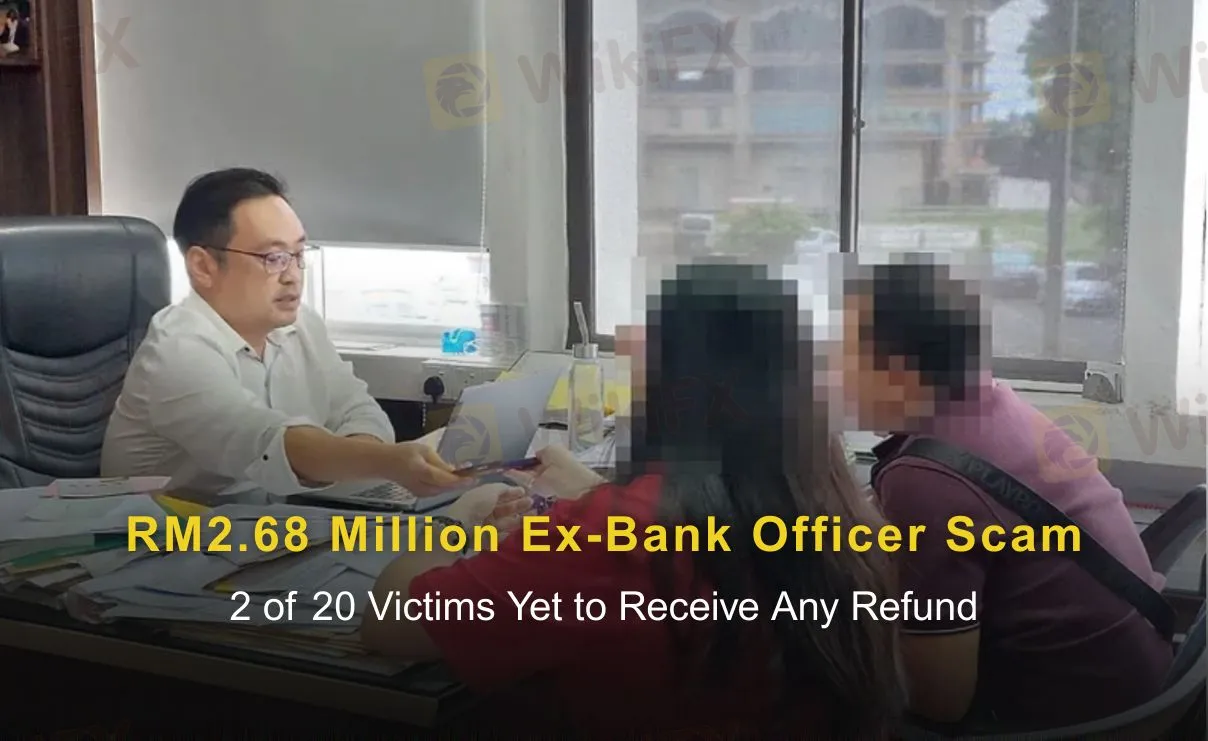
A Malaysian investment scam involving a former bank officer has triggered renewed scrutiny after two victims were reportedly denied refunds, despite most affected individuals having already received compensation.
The case, which involves RM2.68 million in misappropriated funds, has drawn the attention of Stampin Member of Parliament Chong Chieng Jen, who is urging the Ministry of Finance (MoF) to intervene. Chong has questioned the reasoning behind the banks refusal to refund certain victims while compensating others.
According to figures shared by the lawmaker, 20 individuals were affected by the scheme. So far, 14 victims have received full refunds, while four others have been partially reimbursed. However, two victims have received no compensation at all, leaving approximately RM430,000 still outstanding.
Dispute Over Source of Funds
The two victims who have not been refunded reportedly include a couple who had invested cash from their business operations. The couple had used part of their working capital in what they believed was a legitimate investment opportunity offered through a bank officer.
Chong explained that the bank rejected their claim on the grounds that part of the funds could not be proven to have originated from a bank withdrawal. Under the banks conditions for reimbursement, victims must demonstrate that the money invested had been withdrawn from a bank account within 30 days prior to the misappropriation.
If the funds do not meet this requirement, the bank reportedly classifies them as “suspicious”, making them ineligible for compensation.
The situation has created controversy because some victims invested money derived from daily business collections rather than direct bank withdrawals.
Chong cited an example involving a food operator who runs several outlets in shopping malls in Kuching. Approximately RM12,000 of the operators investment came from daily sales proceeds rather than funds withdrawn from a bank account. As a result, the individual was denied a full refund.
Lawmaker Questions Bank‘s Reasoning
Chong has publicly challenged the bank’s decision to reject refunds based on the origin of the funds. He argued that determining whether money is suspicious should fall under the jurisdiction of law enforcement agencies rather than the financial institution involved.
In his view, if there are concerns regarding the legitimacy of the funds, the police should investigate the source of the money, rather than allowing the bank to deny reimbursement outright.
The lawmaker also noted that victims had already suffered financial losses due to the actions of the former bank officer. Denying compensation based on technicalities surrounding the source of funds, he suggested, raises serious questions about fairness.
How the Scam Unfolded
The case first surfaced publicly on November 28, 2025, when a couple approached Chong for assistance after discovering that their life savings of RM400,000 had disappeared.
According to their account, they had withdrawn funds from a unit trust management company with the intention of reinvesting the money into another financial product promoted by the bank officer.
The victims believed they were making a legitimate investment arranged through the bank. The funds were reportedly transferred in cash within the bank branch itself, and the victims never physically handled the money during the transaction.
The situation only raised suspicion when the couple later learned that the bank officer had been suspended from work over issues linked to the same financial product.
Alarmed by the news, they contacted the bank to verify their investment.
No Record of the Investment
When the victims approached the bank for clarification, they received a shocking response. According to Chong, the bank informed them that no account had ever been opened in their names and that no investment funds had been deposited.
The revelation indicated that the money had never entered the legitimate banking system in the manner the victims believed.
The case subsequently expanded as more victims came forward with similar experiences involving the same former bank officer.
Calls for Government Intervention
With a portion of the funds still unrecovered, Chong is now calling for the Ministry of Finance to step in and review the matter.
The dispute over refunds has become a central issue in the case, particularly for victims who relied on personal savings or business income rather than recently withdrawn bank funds.
For observers in Malaysias financial sector, the case mirrors the devastating consequences of investment fraud conducted under the appearance of legitimacy. It also raises broader questions about consumer protection and the responsibilities of financial institutions when fraud occurs within their own operational environment.

Disclaimer:
The views in this article only represent the author's personal views, and do not constitute investment advice on this platform. This platform does not guarantee the accuracy, completeness and timeliness of the information in the article, and will not be liable for any loss caused by the use of or reliance on the information in the article.
WikiFX Broker
Latest News
57 Booked in Pune Forex Scam Probe: The Fake Trading App Checklist Every Indian Investor Needs
WikiFXOANDA Broker: Regulated but Is It Really Safe for Traders?
WikiFXYen Surges on Joint Intervention
WikiFXVonway Review: Users Report Withdrawal Blocks and Account Freezes , What Traders Should Know
WikiFXMangaluru Woman, 61, Loses Rs 16.2 Lakh in Facebook Scheme
WikiFXATFX Trading Volumes Drop 29% After Record Q1
WikiFXAI GOLD Review: Is Your Deposit Safe?
WikiFXFD Review: What Traders Should Know Before Depositing
WikiFXWhy a 90% Win Rate Can Still Lose You Money
WikiFXRazor Markets Review: What Traders Should Know Before Depositing
WikiFX