Abstract:The rise of deepfake scams impersonating national leaders and public figures has caused significant financial losses in Malaysia, prompting the government to propose an AI Governance Bill aimed at strengthening safeguards, restoring public trust and providing regulatory clarity to support responsible AI use and investment.
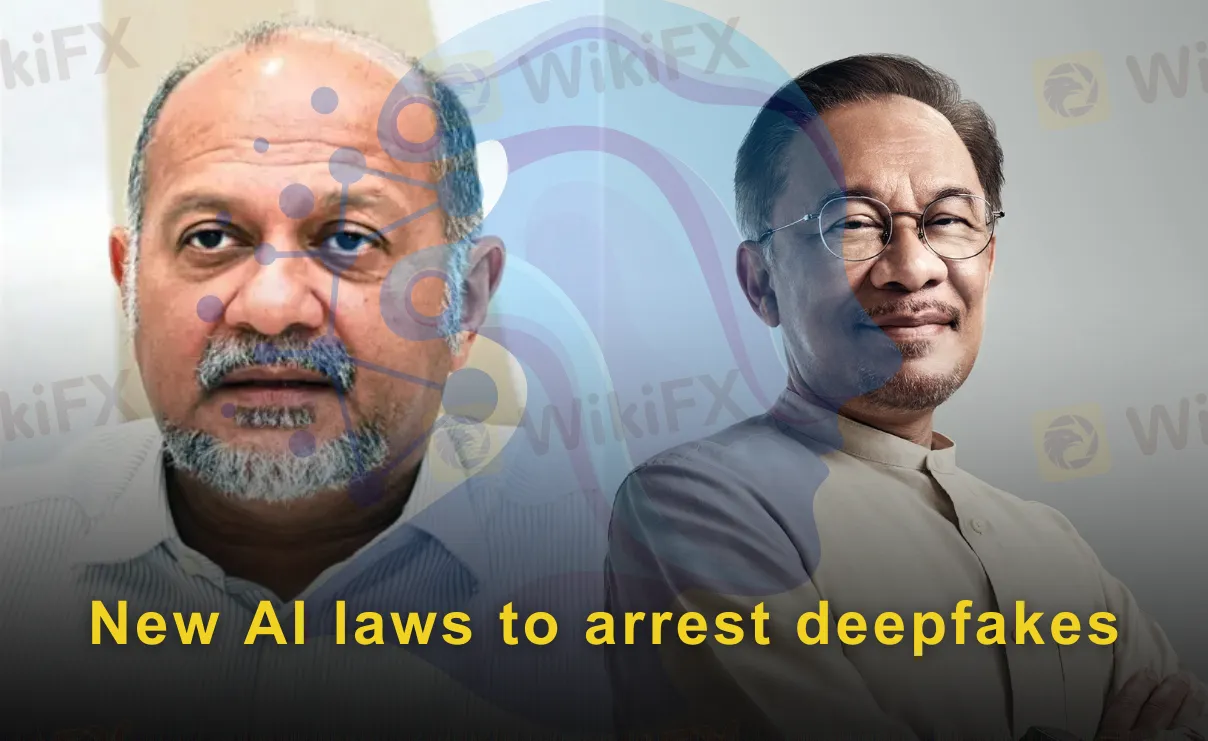
Fake videos showing Prime Minister Datuk Seri Anwar Ibrahim promoting suspicious investment schemes and clips of singer Datuk Seri Siti Nurhaliza Tarudin allegedly asking for donations are becoming increasingly common online, highlighting how deepfake technology is being abused in Malaysias digital space.
Even His Majesty Sultan Ibrahim, the King of Malaysia, has not been spared, with scammers using manipulated images and videos bearing his likeness to deceive the public.

The scale of the problem is worrying. Between 2022 and last year, nearly 225,000 pieces of deepfake, fraudulent and scam-related content were taken down following requests by the Malaysian Communications and Multimedia Commission (MCMC). The financial damage has also been severe. From 2023 to 2025, Malaysians lost an estimated RM5.62 billion to online and financial scams, with losses peaking last year at RM2.77 billion alone.
According to the Home Ministry, these losses stemmed from a wide range of scams, including phone and romance scams, e-commerce fraud, e-financing schemes, as well as fake loans and investment opportunities that never existed.
Against this backdrop, the government is preparing to introduce an AI Governance Bill, aimed at establishing a clear national framework to ensure safer and more responsible use of artificial intelligence. Digital Minister Gobind Singh Deo said the proposed law would address responsibilities at every stage of an AI systems lifecycle, including the need for reasonable safeguards to prevent ethical breaches that could cause harm.
He explained that the framework is designed not to stifle innovation, but to support it by setting clear expectations for safe practices, strengthening public trust and encouraging sustainable adoption of AI technologies across industries. As AI becomes more widely used, he said, ensuring that systems remain safe, reliable and aligned with the public interest will be a key governance challenge.
Gobind also warned that cybersecurity threats linked to generative AI, particularly deepfakes, are becoming increasingly serious. Unlike traditional cyberattacks, these scams rely heavily on exploiting trust, manipulating victims into handing over money or sensitive information.
He pointed to recent warnings from the Securities Commission, which has cautioned the public about deepfake videos impersonating well-known figures and reputable companies to make fraudulent investment schemes appear legitimate. Such cases, he said, show how deepfakes are now being used as direct tools for fraud rather than just misinformation or parody.
“These developments underline why safety and trust must come first when it comes to responsible AI innovation,” he said.
Gobind noted that existing laws already allow authorities to act against harmful AI-generated content. The MCMC, for instance, considers the misuse of AI to digitally manipulate images into obscene, offensive or harmful material as an offence. Scams, regardless of whether AI is involved, also fall under Sections 415 and 420 of the Penal Code, while Section 424 has been strengthened to target="_blank" kwlink="6384064000816950219725">target the financial operations behind scam syndicates.
Beyond protecting the public, the minister said the proposed AI Governance Bill could also help attract local and foreign investment. By providing legal clarity and predictable compliance requirements, the framework aims to reduce uncertainty for businesses looking to deploy AI solutions in Malaysia.
“For investors, the real concern is not regulation, but uncertainty,” Gobind said, adding that clear standards on accountability, transparency and risk management would lower compliance costs and boost confidence.
In the long run, he said, the Bill sends a strong signal that Malaysia is serious about building an AI ecosystem that balances innovation with trust, making the country a more attractive and investment-ready destination for both local companies and foreign investors.