Abstract:Federal court finalizes $3.4M penalty and lifetime ban in Daniel Winston LaMarco Ponzi-style forex case; CFTC highlights investor protection and enforcement.
 Contents
CFTC Forex Fraud Case New York 2025: Final Judgment
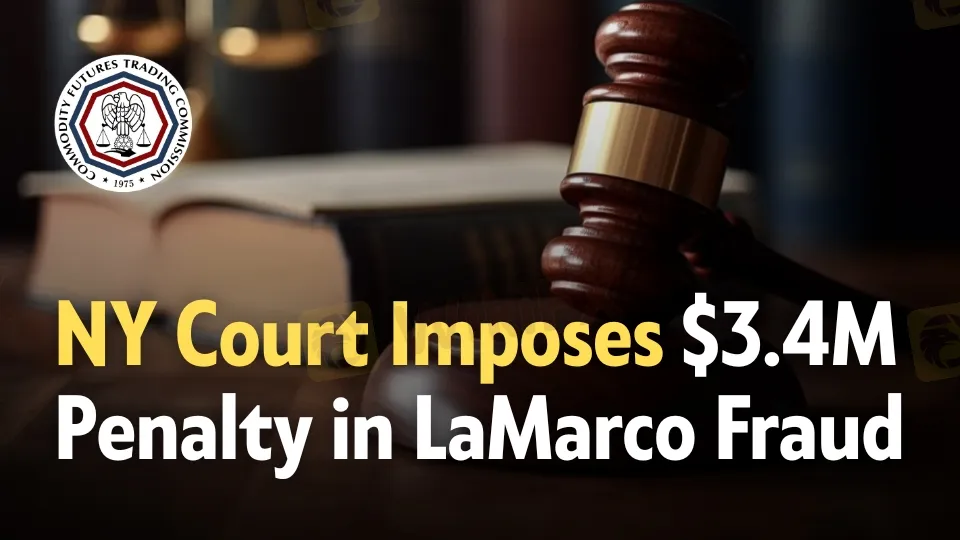
A federal court in New York entered final judgment against Daniel Winston LaMarco, imposing $3,450,400 in monetary relief and permanently banning him from all commodity-related activity for orchestrating a Ponzi-style foreign exchange scheme. The order requires $862,600 in restitution to victims and a $2,587,800 civil monetary penalty, closing the Commodity Futures Trading Commissions seven-year enforcement action that began in July 2017.
Judge Diane Gujarati of the U.S. District Court for the Eastern District of New York adopted findings that LaMarco committed forex fraud and commodity pool operator fraud, and entered a permanent injunction barring future violations of the Commodity Exchange Act. The final judgment followed a series of rulings, including a September 4, 2024, summary judgment on liability and a July 10, 2025, remedies order, both tied to Magistrate Judge James M. Wicks recommendations.
How the Ponzi-Style Foreign Exchange Scheme Worked
According to the court record, LaMarco solicited nearly $1.5 million from friends and acquaintances to trade forex contracts via a commodity pool run through GDLogix, Inc., then lost nearly all of it through personal trading while diverting about $630,050 as purported profits to earlier participants in a Ponzi-like fashion. The court concluded he misappropriated funds, made material misrepresentations, and conducted no trading on behalf of pool participants, despite issuing false monthly statements.
Parallel Action Against GDLogix and Lifetime Bans
GDLogix, Inc., LaMarco‘s company, received a parallel default judgment imposing identical monetary penalties—$862,600 restitution and $2,587,800 in civil penalties—along with permanent registration and trading bans. The corporate default was entered after GDLogix failed to retain counsel and respond, with the court granting the CFTC’s default request and later imposing final remedies.
Court Sanctions and Litigation Conduct
In addition to remedies for fraud, the court sanctioned LaMarco in June 2025 for filing repetitive defamatory allegations against the CFTC and threatening agency counsel, striking portions of his filings and finding his conduct inexcusable and in bad faith. Those sanctions factored into the courts assessment of his litigation behavior and reinforced the need for permanent injunctive relief.
Criminal Conviction and Restitution
The civil judgment follows LaMarcos related criminal case, in which he pleaded guilty to commodities fraud and wire fraud and received a 42-month prison sentence with $872,600 in restitution on February 3, 2017. The CFTC reiterated that restitution orders may not result in recovery if a defendant lacks assets, but emphasized ongoing enforcement to protect customers and ensure accountability.
Enforcement Takeaways and SEO-Relevant Context
- The Daniel Winston LaMarco Ponzi scheme ruling underscores how the Commodity Futures Trading Commission applies forex fraud penalties and permanent industry bans to deter repeat violations.
- The CFTC forex fraud case in New York 2025 culminated in a combined $3.4 million penalty and lifetime bans after findings of a Ponzi-style foreign exchange scheme conviction and related misconduct during litigation.
- The LaMarco GDLogix $3.4 million penalty aligns with the agencys broader strategy of securing disgorgement-like restitution and civil penalties, paired with injunctions and registration bans in commodity fraud cases.
- The Commodity Futures Trading Commission‘s forex fraud penalties in this matter included both monetary sanctions and structural prohibitions, reflecting the court’s view of investor harm and market integrity risks.
Key figures and orders
- Total judgment: $3,450,400 ($862,600 restitution; $2,587,800 civil penalty).
- Permanent injunction and lifetime commodity-related bans against LaMarco and GDLogix.
- Summary judgment on liability (Sept. 4, 2024) and final remedies adopted (July 10, 2025).
- Sanctions for defamatory filings and threats to CFTC counsel (June 20, 2025).
- Criminal sentence: 42 months imprisonment; $872,600 restitution (Feb. 3, 2017).
These outcomes demonstrate how courts and the CFTC respond to Ponzi-style foreign exchange scheme conviction matters, combining restitution-focused remedies with protective injunctions to safeguard investors and preserve market integrity.
Stay tuned for the latest news from the financial authority to stay vigilant. Scan the QR code below to download and install the WikiFX app on your smartphone.