


Dufourbit Warning: FCA Says the Firm Is Unauthorised—7 Checks Before You Pay
The FCA warned about Dufourbit on 19 August 2026. Check the named domain, contact details, missing protections and seven steps before making any payment.
Original

简体中文
繁體中文
English
Pусский
日本語
ภาษาไทย
Tiếng Việt
Bahasa Indonesia
Español
हिन्दी
Filippiiniläinen
Français
Deutsch
Português
Türkçe
한국어
العربية
اردو




Abstract:An Israeli businessman faces extradition to Germany after his arrest in Morocco, charged with defrauding German investors in a forex scam. Interpol issued the arrest warrant.

A prominent Israeli businessman was apprehended last week at Casablanca airport in Morocco, following an Interpol warrant that tied him to a sprawling forex fraud scheme. Allegations suggest he played a central role in deceiving German investors out of millions of euros in a sophisticated foreign exchange con.
 Contents
While vacationing in Dubai with his family, the businessman stopped over in Morocco, where Moroccan authorities, collaborating with international law enforcement, arrested him based on an Interpol warrant at Germany‘s behest. This arrest represents a major step forward in Germany’s ongoing crackdown against Israeli-linked forex scams targeting European, especially German, investors.
Insiders reveal the businessman was stunned when officers presented the Interpol warrant. Law enforcement had been meticulously investigating the case for years, waiting for the opportune moment to make the arrest. “They trapped him as soon as he left Dubai,” a Moroccan official told Israeli news outlet Mako, highlighting the precision behind the operation.
Facing probable extradition to Germany, the businessman is expected to confront serious charges, similar to those imposed on others implicated in the scheme.
Reports indicate the businessman orchestrated a complex forex scam spanning Israel and Eastern Europe. He leased expansive offices where teams posed as legitimate forex brokers and wooed German investors with enticing promises of high returns in the foreign exchange market. Instead, investors later found their funds had vanished.
This case fits a troubling pattern: several Israeli nationals have previously been linked to large forex fraud operations. German authorities have long monitored these schemes, peeling back layers of deception that mirror earlier scams.
His arrest underscores the increasing global effort to root out forex fraud, with Interpol warrants becoming vital tools in cracking Israeli forex scams.
Israeli investigators, particularly the Lahav 433 police unit, had pursued this businessman for years. They requested court orders freezing assets worth tens of millions of shekels, including a $7.5 million villa in Herzliya. Yet, despite persistent efforts, they could not amass enough evidence to press formal charges on their own.
By contrast, German prosecutors demonstrated unwavering resolve, building a case robust enough to secure an international arrest warrant. Their reputation for issuing only well-substantiated warrants suggests confidence in their evidence and the strength of their case.
Currently detained in Rabat, the businessman awaits extradition proceedings to Germany. Moroccan authorities are actively coordinating with Israeli police to gather additional proof that will bolster Germanys prosecution.
This unfolding cross-border saga highlights the growing alliances among Germany, Israel, and Morocco in combating complex forex fraud schemes, aiming to protect innocent investors from such global financial crimes.

WikiFX: Essential Tools for Protecting Forex Investors
This high-profile Israeli businessman's forex fraud case is a cautionary tale for global investors. To help navigate the complex and sometimes risky forex market, platforms like WikiFX have emerged as indispensable safeguards for traders and investors. Heres how WikiFX can enhance your protection:
If youre trading or considering investing in foreign exchange, always research thoroughly. Use reliable tools like WikiFX to ensure your broker is legitimate and regulated—helping you avoid scenarios like those now making headlines in Casablanca.

Disclaimer:
The views in this article only represent the author's personal views, and do not constitute investment advice on this platform. This platform does not guarantee the accuracy, completeness and timeliness of the information in the article, and will not be liable for any loss caused by the use of or reliance on the information in the article.
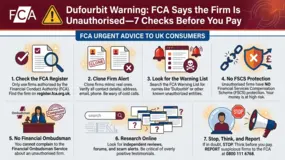
The FCA warned about Dufourbit on 19 August 2026. Check the named domain, contact details, missing protections and seven steps before making any payment.

Gold surged above $4,500 after the US Treasury expanded its purchases of longer-dated government bonds, pushing yields and the dollar lower. But this was not debt forgiveness or Federal Reserve money printing—it was a liquidity operation that exposed a much bigger fear: America may be finding it increasingly difficult to live with market-driven interest rates.
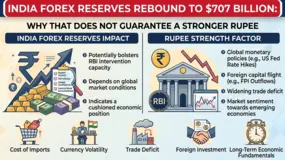
India forex reserves rose by $14.136 billion to $707.002 billion in the week ended 7 August 2026. This explainer separates RBI forex-reserve facts from rupee predictions, explains the role of foreign currency assets and gold, and gives forex-market readers a practical checklist before treating one headline as a trading signal.
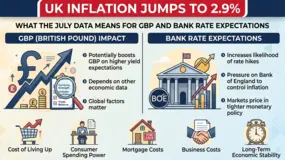
UK CPI rose to 2.9% in July 2026 from 2.6% in June. See what the data may mean for GBP, gilt yields and Bank Rate expectations without overreading one release.
WikiFXWikiFXWikiFXWikiFXWikiFXWikiFXWikiFXWikiFXWikiFXWikiFX