Abstract:Federal Reserve Vice Chairman Philip Jefferson's recent remarks have attracted widespread attention in the market.
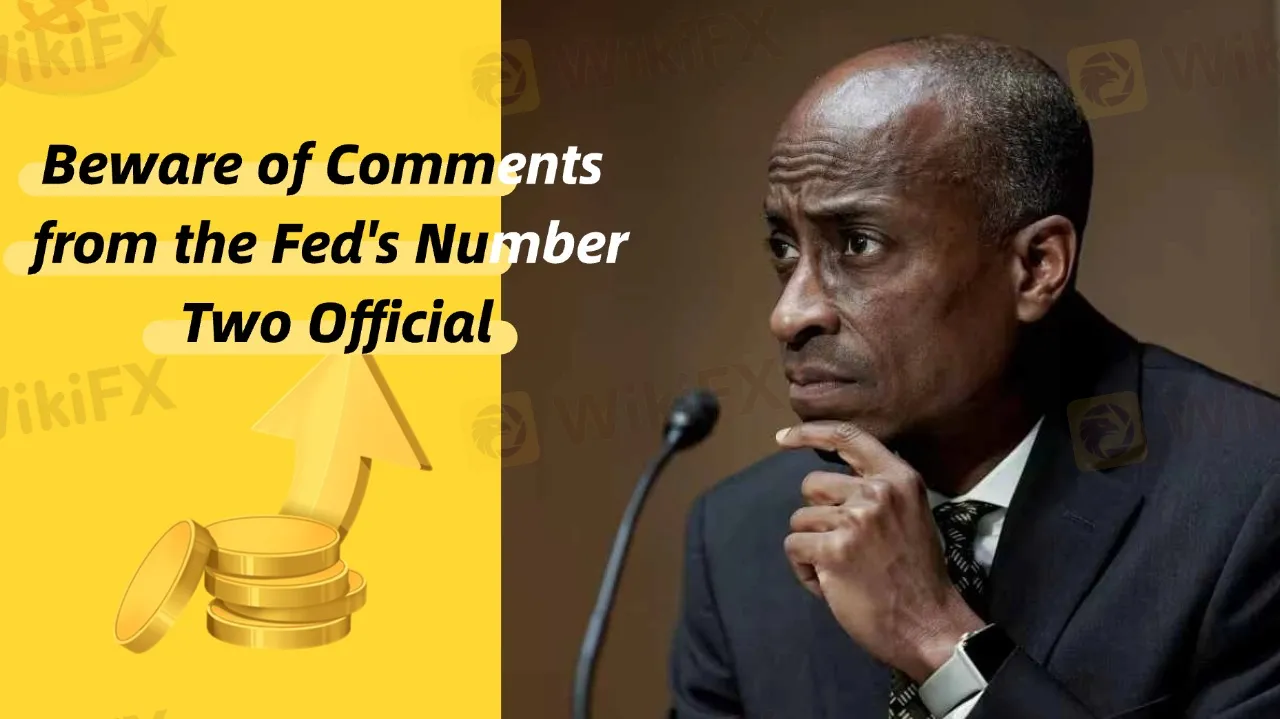
Speaking at Lafayette College in Easton, Pennsylvania, Jefferson stated that while the path to reducing inflation will remain challenging, he is optimistic about the continued cooling of price pressures. He emphasized that as long as the economy and labor market remain strong, the Fed should cautiously adjust interest rates. Jefferson's comments conveyed a relatively optimistic view of the economic outlook, while also signaling a cautious approach the Fed may take in policy-making.
For investors, Jefferson's speech carries significant implications. First, he made it clear that although inflation may continue to decline, the process could be volatile. This means that investors need to be aware that inflationary pressures may not disappear immediately, and uncertainty in the market remains.

At the same time, Jefferson suggested that economic growth may be slightly lower than expected in 2024, but strong consumer spending could help drive economic recovery. His remarks send a signal of confidence in the economy, while also warning investors that policymakers may adjust monetary policy flexibly in response to changes in the economy and market conditions.
Looking ahead, the Federal Reserve will face a series of complex challenges. First, the issue of inflation remains, and although the Fed has already implemented several rate hikes, ensuring effective control of inflation is still an unresolved issue.
Meanwhile, the strong performance of the labor market means that the Fed must be cautious when adjusting interest rates to avoid tightening monetary policy too much, which could slow down the economy. Additionally, President Trump's economic policies may introduce further uncertainty into the Fed's decision-making process, and how the Fed responds to these external factors will be a key task in the coming months.
In the face of these challenges, investors should maintain a cautious stance. While Vice Chairman Jefferson's optimistic outlook provides some market signals, the volatility of inflation and the uncertain economic environment still pose risks.
Therefore, investors should closely monitor the Fed's further statements and economic data, and adjust their investment strategies flexibly. In the context of increasing global economic uncertainty, diversification and risk management remain effective strategies for navigating market volatility.