Abstract:U.S. elections since 2000 have triggered varying market reactions, with impacts on stock prices, Treasury yields, and global sentiment. Here's how.
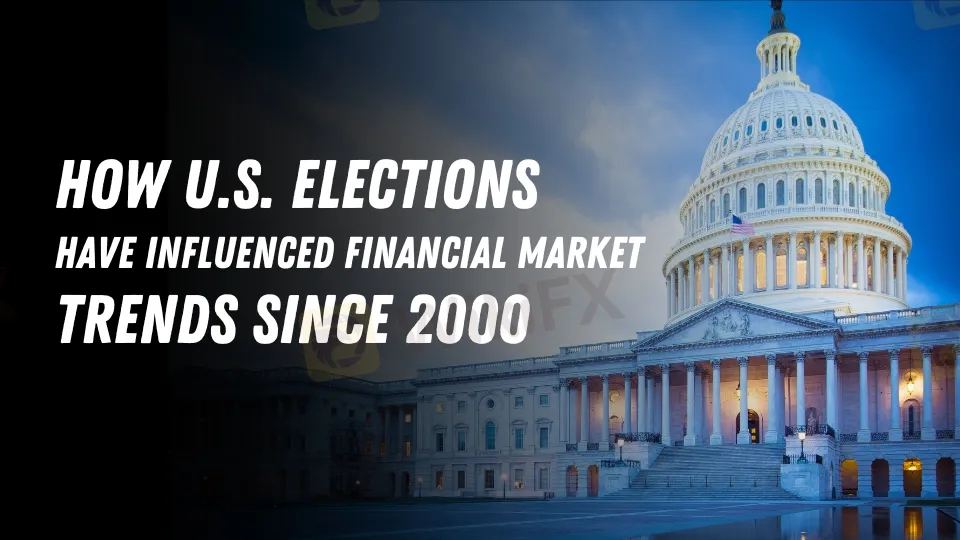
Over the last two decades, the impact of U.S. elections on financial markets has been complicated and diverse. Since 2000, the impact of political results on equities, Treasury rates, and investor mood has been affected by the particular circumstances of each election as well as the larger economic situation at the time. Examining the last six presidential elections allows us to see how market patterns reacted to both predicted results and unexpected surprises.
The S&P 500 has gained at the end of November in three of the six elections since 2000 while falling in the other three. Treasury rates also varied, with ten-year yields falling in four cases and rising in two. These trends emphasize the dynamic link between election outcomes and financial markets, with other events, such as economic crises or big policy changes, either accentuating or dampening market responses.
The disputed Bush-Gore election in 2000 caused a month of uncertainty that weighed heavily on the markets. The historic recount in Florida pushed back the ultimate verdict, causing volatility and leading to an 8% decline in the S&P 500 in November alone. Investors flocked to US Treasuries, and ten-year rates fell as investors sought stability despite the extended political turmoil.

Four years later, in 2004, George W. Bush's re-election provided a feeling of stability, as investors expected consistent policy direction. The S&P 500 increased by 1.1% and 1.6% in the two days after the election, boosted by favorable economic statistics and confidence in continuing policies that benefitted corporations during the Bush administration.

The 2008 election took place at the height of the Global Financial Crisis, limiting any market reaction to Barack Obama's victory. With the problem in the spotlight, the S&P 500 fell more than 10% in two days after the election. The economic slump, emphasized by declining employment and service sector statistics, eclipsed the political change, indicating that the market's major worry was the looming financial catastrophe.

Concerns over the “fiscal cliff” and continued European debt woes, notably in Greece, weighed heavily on markets throughout Obama's re-election bid in 2012. While Obama's win was generally predicted, concerns about potential tax hikes and spending cutbacks in the United States, as well as uncertainty in Europe, caused a 2.4% decrease in the S&P 500 the day after the election, followed by more drops. Investors were concerned that the parliamentary impasse would stymie economic growth, while larger global worries fueled market unease.

One of the most unexpected events of the 2016 election was Donald Trump's triumph, which astonished experts and pollsters who believed Hillary Clinton would win. Markets initially responded with caution, but investors rapidly started to factor in the possibility of massive fiscal stimulus under a Republican-led administration. The 10-year Treasury yield increased by more than 50 basis points in the weeks after the election, indicating anticipation of forthcoming corporate tax cuts and economic changes, which were eventually realized in the Tax Cuts and Jobs Act of 2017.

The Biden-Trump election elicited conflicting reactions from markets in 2020. Biden's win initially hinted at a possible split government, with Senate contests still undetermined. The promise of policy balance boosted market sentiment, while Pfizer's revelation of a highly successful COVID-19 vaccine fueled more gains. While Biden's victory implied policy adjustments, the epidemic remained a significant driver of market moves as investors grew confidence in an impending economic recovery.

Final thoughts:
Analyzing market movements surrounding US elections demonstrates that, although political decisions might alter investor emotion and financial strategy, wider economic circumstances and unanticipated global events often have a greater effect. Elections are not the only factors influencing market success. The true difficulty and potential are how governments and markets react to emerging events, ranging from financial crises to global health concerns. Understanding these processes provides vital insights into how markets could behave in future election years.