


IG Review for India 2026: RBI Alert List, Regulation, Login, and Forex Risk
IG review for India in 2026: see the RBI Alert List entry, overseas regulation, login checks, forex limits, and a clear broker safety checklist.
Original

简体中文
繁體中文
English
Pусский
日本語
ภาษาไทย
Tiếng Việt
Bahasa Indonesia
Español
हिन्दी
Filippiiniläinen
Français
Deutsch
Português
Türkçe
한국어
العربية
اردو




Abstract:TradeStation Securities fined $700K by FINRA for AML program failures from 2016-2022, highlighting the need for robust compliance in financial trading.
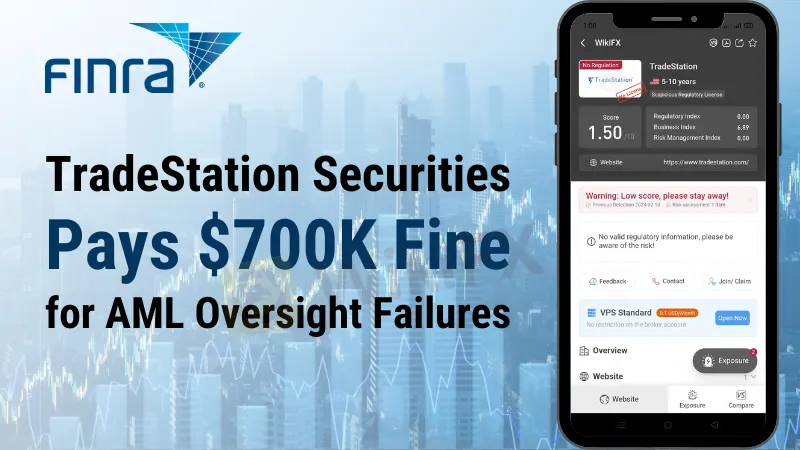
TradeStation Securities, Inc. agreed to pay a $700,000 fine after a settlement agreement with the Financial Industry Regulatory Authority (FINRA). The outcome of the decision is the comprehensive review of the firm's Anti-Money Laundering (AML) practices, which lasted from January 2016 to March 2022.
The main issue in this settlement was TradeStation's failure to design and properly run an AML program capable of detecting illicit trading activity by its clients. Initially, a third-party vendor's automated monitoring system relied heavily on the firm. Between 2016 and 2019, this algorithm generated over 100,000 transaction notifications, averaging 100 alerts each trading day. The enormous number of false positives among these warnings posed a considerable barrier to recognizing true suspicious actions.
The lack of workers designated to monitor these notifications exacerbated the issue. Only two to three compliance analysts, already overburdened with other responsibilities, were entrusted with reviewing these notifications. Their responses to the notifications varied with choices such as rejecting them without further action, giving cautions to customers, banning trading in certain assets, or even canceling customer accounts. However, a fundamental flaw in their methodology was the uneven documentation of their results and conclusions, which proved to be a crucial omission.
Recognizing the need for improvement, TradeStation switched vendors in 2019, seeking to achieve better outcomes. The new strategy reduced false positive alarms, making it more successful. Furthermore, in 2020, in tandem with its business expansion, the company increased its workforce by hiring three additional analysts to help with alert evaluations.

Despite these improvements, the firm's experts did not always flag possibly suspicious trades for additional inquiry. This contradiction was a major vulnerability in TradeStation's AML software. Annual independent AML testing reports in 2016 and 2017 have previously identified these flaws, underscoring the need for better documentation and monitoring of escalated concerns. However, it was not until March 2022 that the firm fully integrated these recommendations into its systems.
TradeStation violated many FINRA standards by failing to consistently escalate certain potentially suspicious trading operations for inspection and by failing to have a well-designed process in place to oversee the evaluation and resolution of alarms. The business specifically breached Rule 3310(a), which governs the implementation of AML systems, as well as Rule 2010, which governs the maintenance of high standards of commercial honor and equitable trading practices. The company also violated FINRA Rule 3110 by failing to create written supervisory procedures (WSPs) for accepting and reselling low-priced securities.
As a result of these findings, TradeStation has accepted a reprimand as well as a substantial $700,000 punishment. This episode emphasizes the vital need for comprehensive and timely AML processes in the financial industry. The intricacies and changing nature of financial trading require ongoing monitoring and agility in compliance processes.
TradeStation's case serves as a strong reminder to other financial institutions of the necessity of complying with regulatory requirements and the need for continual improvements in their AML procedures to maintain the integrity of financial markets and prevent illegal activity.
For more details on this story and daily updates on financial market news, visit WikiFX's news section at https://www.wikifx.com/en/news.html. Stay informed!

Disclaimer:
The views in this article only represent the author's personal views, and do not constitute investment advice on this platform. This platform does not guarantee the accuracy, completeness and timeliness of the information in the article, and will not be liable for any loss caused by the use of or reliance on the information in the article.
IG review for India in 2026: see the RBI Alert List entry, overseas regulation, login checks, forex limits, and a clear broker safety checklist.
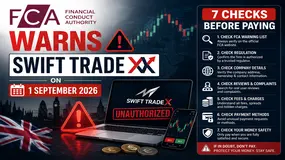
FCA warns Swift TradeX in a notice first published and updated on 1 September 2026. The UK Financial Conduct Authority says the firm may be providing or promoting financial services without permission, is not authorised, and may be targeting people in the UK. The notice names the website swifttradexai.com, a Worcester address and a UK telephone number, but also cautions that unauthorised businesses may use incorrect or borrowed contact details. The confirmed issue is authorisation status—not a court finding about every transaction. Anyone considering a payment should stop, verify the firm independently, and avoid using contact information supplied by the platform itself.
ThinkMarkets review for India: check the RBI Alert List, overseas entities, regulation, login security, forex rules, costs, withdrawals, and leverage risk.
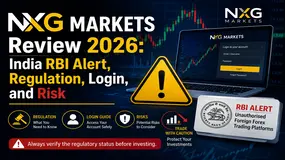
People searching NXG MARKETS regulation or regulation NXG MARKETS need to separate an overseas licence from permission in India. The Reserve Bank of India Alert List, updated 19 November 2025, names NXG Markets and nxgmarkets.com. RBI says listed entities are neither authorised to deal in forex under FEMA nor authorised to run an approved forex electronic trading platform. The broker's own site also says it does not serve residents or citizens of India. This NXG MARKETS review found an overseas Mwali licence record, but no RBI authorisation. No cited court ruling proves fraud. For an Indian user, the local warning and service restriction should control the decision.
WikiFXWikiFXWikiFXWikiFXWikiFXWikiFXWikiFXWikiFXWikiFXWikiFX