Abstract:Find out how Artificial Intelligence (AI) is reshaping trading, providing powerful tools that enhance data analysis, risk management, and automated execution, revolutionizing the trading landscape!
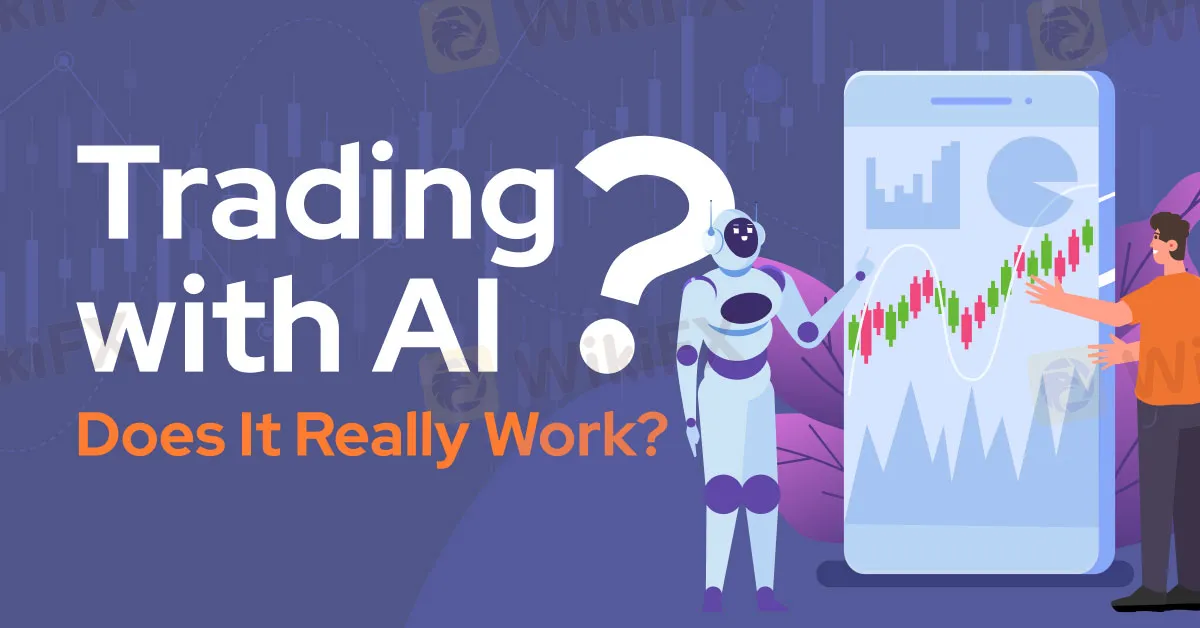
In the ever-evolving landscape of trading, staying ahead of the curve is a perpetual pursuit for traders seeking an edge. Enter Artificial Intelligence (AI), a revolutionary force transforming the way trading strategies are formulated, executed, and refined. From sophisticated algorithms to predictive analytics, AI has emerged as a game-changer, offering traders invaluable tools to navigate complex markets with enhanced efficiency and insight.
AI in trading encompasses a myriad of applications, each designed to augment and optimize different facets of the trading process. One of its primary advantages lies in its ability to analyse vast volumes of data at speeds inconceivable to human capabilities. This data could range from historical price movements and market trends to news sentiment analysis and even social media chatter—all factors influencing market dynamics.
By harnessing AI-powered algorithms, traders can sift through this ocean of data to identify patterns, correlations, and anomalies that might elude human perception. Machine learning models, for instance, can learn from historical market data, recognizing patterns that precede certain market movements or signal potential opportunities. These insights empower traders to make more informed decisions and execute trades with greater precision.

Another notable application of AI in trading is in the realm of risk management. AI-driven risk assessment models can dynamically analyze market conditions, assess portfolio exposure, and adapt risk strategies in real-time. This proactive approach helps traders mitigate potential losses by swiftly responding to changing market dynamics, thus safeguarding their investments.
Furthermore, AI-driven trading systems can execute trades with unparalleled speed and efficiency. Automated trading algorithms, often referred to as “bots,” can react to market conditions and execute predefined strategies in milliseconds, far surpassing human capability. These systems can operate 24/7, enabling traders to capitalize on fleeting opportunities in global markets regardless of time zones.
However, it's crucial to note that while AI empowers traders with sophisticated tools and insights, it is not a silver bullet guaranteeing success or profits. Markets are inherently unpredictable, influenced by multifaceted factors beyond the scope of AI's analysis. Human judgment, intuition, and strategic decision-making remain integral components of trading success, complementing AI-driven insights.
It's imperative for traders to approach AI tools with a balanced perspective, understanding their capabilities and limitations. Utilizing AI as an aid, combined with human expertise, allows for a synergistic relationship that maximizes the potential for success in trading.
In conclusion, AI has undoubtedly revolutionized the trading landscape, offering traders unparalleled access to data-driven insights, automated execution, and sophisticated risk management tools. Its integration into trading strategies has undeniably enhanced efficiency and provided a competitive edge. However, it's essential to remember that while AI augments decision-making, it's not a substitute for human judgment and experience. The most successful traders leverage AI as a powerful assistant, marrying its capabilities with their own expertise to navigate the dynamic world of trading.