Abstract:The US dollar is vulnerable due to rising default risks amidst political deadlock over raising the debt limit. Poor Chinese economic indicators affect the Australian dollar and yuan, both declining. Despite this, the US dollar index remains relatively steady at 102.47.
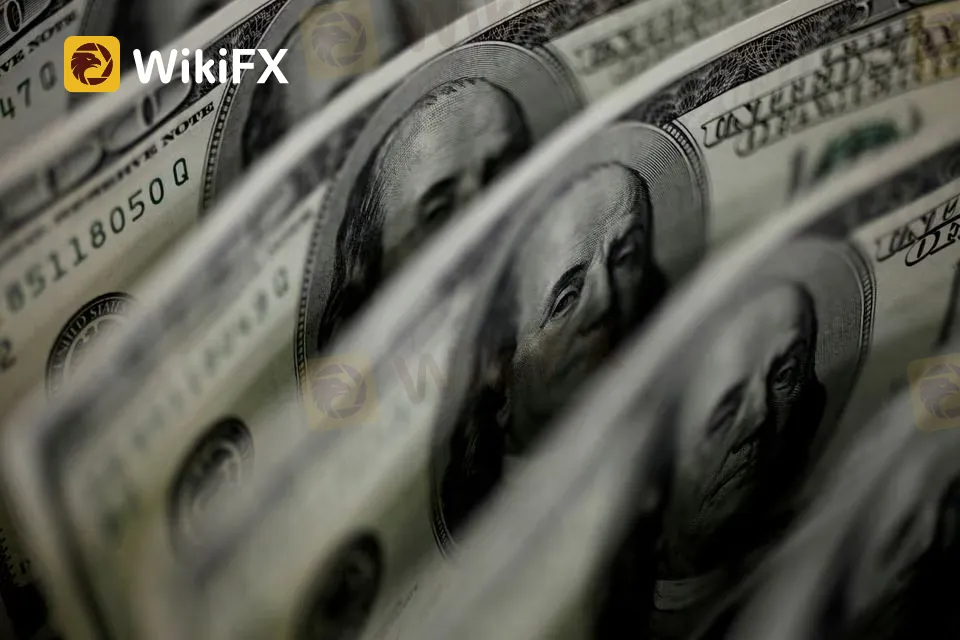
The US dollar fell more on Tuesday, as the looming danger of a US default remained large. The current political impasse between Democrats and Republicans over raising the debt limit has exacerbated investors' concerns.
The Australian dollar, which initially saw minor gains, fell into the red following less-than-expected economic data from its significant trading ally, China. The data further emphasized the stumbling COVID recovery in China. Consequently, the yuan also dipped, approaching a two-month low.
The U.S. dollar index, a measure of the dollar's value against six major international currencies, remained relatively stagnant at 102.47. Overnight, it recoiled from a five-week high, shedding 0.26%.
Last week, the dollar found support from a surge in safe-haven demands triggered by China's poor economic performance, coupled with an unexpected rise in U.S. consumer inflation expectations. This revived the speculation of a potential Federal Reserve rate hike in June.
However, this week, the impending borrowing limit took center stage. Treasury Secretary Janet Yellen warned that the limit could be reached as early as June 1, pushing it to the forefront of investors' concerns.
Despite the tense situation, President Joe Biden remained optimistic about reaching a deal ahead of a scheduled meeting with congressional leaders later Tuesday. Nonetheless, Republican House Speaker Kevin McCarthy stated that the two sides are still considerably divided.
The market has been somewhat complacent, assuming that a resolution will eventually be reached. However, Bart Wakabayashi, a branch manager at State Street in Tokyo, warned that a lack of preparedness for the worst-case scenario could lead to substantial financial distress.
“Usually, during risk-off scenarios, the dollar is the go-to asset. But, the current situation is unusual, with the dollar weakening. The breakdown in correlation leaves market players in a conundrum,” he added.
On Tuesday, the euro, which has the most weight in the dollar index, held steady at $1.0870, having recovered from a five-week low.
The pound fell 0.13% to $1.2515 after rising 0.67% on Monday. The yen rebounded from a nearly two-week low after being battered by the growing gap between US and Japanese long-term rates.
Against the yen, the dollar fell 0.08% to 135.975 after reaching 136.32 on Monday. The 10-year Treasury yield slipped to around 3.49% in Tokyo from a high of 3.511% overnight.
The Australian dollar, not included in the dollar index, rescinded its minor early gains ahead of the release of Chinese retail sales and industrial production data and plunged further post-release. It last stood down 0.33% at $0.6678.
Sean Callow, a senior FX strategist at Westpac, pointed out, “The Aussie's upward trajectory has been hindered by mounting investor concerns over China's future prospects.” He expects the Australian dollar could retreat to approximately 0.6645, its recent trading range's lower limit, following today's data.
The U.S. dollar rose 0.2% to 6.9723 yuan in the offshore market after reaching 6.9749 on Monday, a level unseen since March 10.
Download and install the WikiFX App on your smartphone to stay updated on the latest news.
Download the App here: https://social1.onelink.me/QgET/px2b7i8n