Abstract:The exchange rate of the federal republic of Nigeria as at this time last year was still a headline that the people of the country do say, as at this time 2020, the exchange rate was a bit lower than 503/$, not to talk of the exchange rate in 2019, compared to 2022 exchange rate of 601/$. Things gets worst day by day for the Nigeria exchange rate. It has not been stable for a longer period of time. What is the major cause of this? How does the exchange rate change easily?
In everything but financial markets, where every price fluctuation is significant, a year is a very long period.
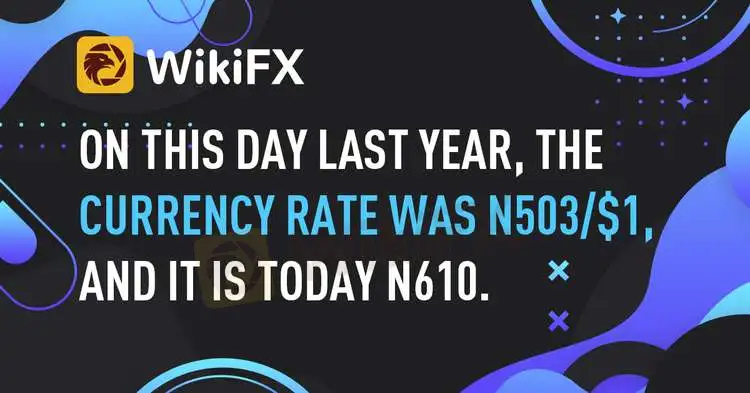
Last year at this time, the naira-to-dollar exchange rate was at 503/$1. Nigerians were stunned at the moment because no one expected the currency rate to decline so dramatically. The last time the exchange rate crossed N500 was in early 2017, when it broke through only to plummet when the CBN opened the I&E window.
That's a long period, and as we've seen, it only took a few months to reach to N580/$1 by the end of the year.
Today's exchange rate is N610/$1, with almost N100 added in less than a year. It's an incredible trend that doesn't appear to be slowing down anytime soon.
So, how did we end ourselves here?
When considering how the exchange rate suddenly soared beyond N600 to the dollar, one is reminded of the CBN's restriction on the selling of currency to BDC operators in the nation.
Prior to the CBN's prohibition, the exchange rate was trading about N500 to the dollar. In less than three months, however, the rate had risen to N573 by September of the same year.
Meanwhile, prior to the BDC ban, the CBN had extended its Naira4dollar plan for diaspora remittances, which it launched in March of the same year in an effort to boost diaspora remittance growth.
The Naira4dollar initiative gives diaspora remittance beneficiaries N5 for every $1 received through CBN IMTOs.
Unfortunately, this program has yet to result in increased liquidity in the Nigerian economy, since the exchange rate continues to fall.
Later in the year, finding its foreign reserves dwindling, the Nigerian government collected $4 billion through a Eurobond sale in September 2021, along with a $3.3 billion IMF infrastructure loan, pushing Nigeria's foreign reserves beyond the $41 billion mark.
Despite the country's foreign reserve growing, it is alarming to learn that it has dipped below $39 billion in less than 7 months.
Why is this important?
The CBN's many initiatives to entice currency into the nation have not resulted in positives for our present exchange rate. Some economists and analysts may argue, however, that Nigeria's exchange rate problem is not only monetary, but also fiscal.
For the naira to stabilize, the CBN will need considerable FX inflows to fulfill pent-up demand, either through Eurobond issuances (which come at a hefty cost) or better FDI, FPI, and diaspora remittances.