


FOMC Minutes Today: 3 USD and Gold Scenarios Traders Should Prepare For
The Fed releases the July FOMC minutes on 19 August 2026. Here are three USD and gold scenarios, confirmation signals, and a practical risk checklist for traders.
Original

简体中文
繁體中文
English
Pусский
日本語
ภาษาไทย
Tiếng Việt
Bahasa Indonesia
Español
हिन्दी
Filippiiniläinen
Français
Deutsch
Português
Türkçe
한국어
العربية
اردو




Abstract:Peter Schiff, president and CEO of Euro Pacific Capital, thinks time is wearing thin for the US economy.
Peter Schiff — president and CEO of Euro Pacific Capital — thinks the longer the Federal Reserve keeps interest rates artificially low, the bigger the collapse will be when the unwinding takes place.
He expands on his view that the economy is “artificial” by citing recent action in the IPO market, where companies have garnered sky-high valuations due to the overwhelming prevalance of cheap capital.
Unfortunately, the way Schiff sees this debacle being resolved is through the popping of the bubble via higher interest rates.
If you're looking for a rosy outlook for the US economy, it's probably best to steer clear of Peter Schiff.
The president and CEO of Euro Pacific Capital sees trouble brewing in the “artificial” US economy. Moreover, he thinks the halcyon days of growth and prosperity within US borders are wearing thin — and he isn't going to sugarcoat his perspectives, especially when it comes to the party he thinks is responsible for it all: the Federal Reserve.
“There's a limit to how long the Fed can continue to keep interest rates artificially low,” he said in a recent edition of The Peter Schiff Show Podcast. “The longer they succeed in keeping them low, the bigger the ultimate failure is going to be when it comes to everything collapsing down.”
To him, the Fed's policies have created a massive bubble — via interest rate cuts and quantitative easing — that's artificially inflated assets of all kind within the US economy, and created an environment that is extremely speculative. What's worse, time is running out.
“You have the federal government borrowing record amounts of money, you have states and municipalities borrowing record amounts of money, you have corporations borrowing record amounts of money, you have individuals borrowing record amounts of money,” he said.
Schiff added: “This whole phony economy that was built on artificially low interest rates implodes, and it's not a question of if it will happen, it's only a question of when.”
And he's just getting warmed up.
Schiff points to the IPO market as a prime example of how the Fed's ultra-low interest rate policies are having a nefarious effect on today's market. In his view, it's made debt way too easy to come by, and has pushed valuations — undeservedly — into the stratosphere.
“One example of this, is what's going on with a lot of these stocks — these money-losing companies,” he said. “In the speculative fever that the Federal Reserve created, investors didn't care about how much money companies were losing — and they were investing in them anyway, because they just thought they would make money finding a greater fool to pay an even higher price.”
It's hard to disagree with Schiff's point here. Companies that have garnered sky-high valuations in private markets have been getting crushed when they come public arena.
Here's how some of the more notable IPOs issues have performed since offering their shares to the public:
Uber (UBER): -33%
Lyft (LYFT): -43%
Slack (WORK): -17%
Fiverr (FVRR): -15%
And that's not counting WeWork and Endeavor, who recently postponed their IPOs amidst the turmoil.
Unfortunately, the only way Schiff sees the problem being resolved has dismal implications — ones he thinks has the potential to upend the entire economy.
“Interest rates need to rise,” he said. “That's part of the cure, that's part of the solution. But when they do, we prick the bubble — and everything comes imploding down.”
Disclaimer:
The views in this article only represent the author's personal views, and do not constitute investment advice on this platform. This platform does not guarantee the accuracy, completeness and timeliness of the information in the article, and will not be liable for any loss caused by the use of or reliance on the information in the article.
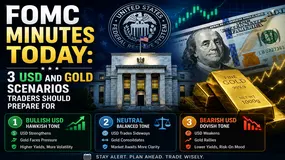
The Fed releases the July FOMC minutes on 19 August 2026. Here are three USD and gold scenarios, confirmation signals, and a practical risk checklist for traders.
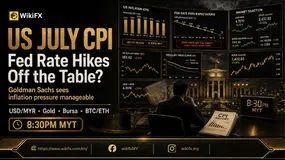
Goldman Sachs expects inflation to remain manageable as America’s labour market loses momentum. For Malaysian investors, the result could influence the US dollar, ringgit, gold and Bursa sentiment.
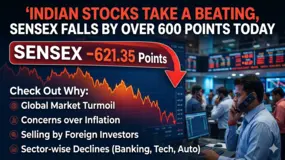
Indian stock markets witnessed a sharp low in the early trading hours on Monday. While the Sensex fell by more than 600 points, Nifty slumped under 23,200. The fall in the stock market today is the investors’ reaction to the escalating tensions in the Middle East, a surge in crude oil prices and weakness across markets worldwide. At around 9:30 a.m. on June 8, 2026, the BSE Sensex dropped by 627.47 points to 73,615.87, recording a fall of 0.85%. At the same time, the Nifty declined by 195.40 points to 23,171.30, registering a 0.84% fall. The selloff was broad based, with most sectoral indices slipping into red. Nifty IT, Nifty Realty, Nifty Auto and Nifty Metal slipped by 1.61%, 1.68%, 1.21% and 1.31%, respectively. Even the Nifty Midcap 100 and Nifty Smallcap 100 declined by 0.73% and 0.63%, respectively. As far as Sensex stocks are concerned, only State Bank of India, Axis Bank, Power Grid Corporation of India and Sun Pharmaceutical Industries were found to be green. Among the one
A power struggle over the future of the Federal Reserve is intensifying as Treasury Secretary nominee Scott Bessent spearheads a process to select the next Fed Chair, aiming to align the central bank more closely with the White House's economic agenda.
WikiFXWikiFXWikiFXWikiFXWikiFXWikiFXWikiFXWikiFXWikiFXWikiFX